• Home
    • About
    • Location
    • Features
    • Centres
  • People
    • The Director
    • Board of Management
    • Staff
    • Academic Committee
      • Hindi
      • History
      • Sociology
      • Education
      • Economics
      • English (C)
      • English (E)
      • Tribal Studies
      • Political Science
      • Certificate Course in Fisheries Technology
      • Certificate Course in English for Communication
    • Study Centres
  • Academics
    • Courses
      • B.A.(Pass Course)
      • Certificate Course In Fisheries Technology
      • Certificate Course in English For Communication
    • Admission
      • Eligibility
      • Requirements
    • Fee Structure
      • BA (Pass Course)
      • Certificate Course in Fisheries Technology
      • Certificate Course in English for Communication
    • Assignment Marks
    • Results
  • Downloads
    • Syllabus
    • Sample Papers
    • Prospectus
  • Contact Us
  •  

IDE :A Primer

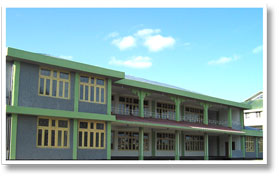
A low angle shot of the Institute building

The formal system of higher education in our country is facing the problems of access, limitation of seats, lack of facilities and infrastructure. Academicians from various disciplines opine that it is learning which is more important and not the channel of education. The education through distance mode is an alternative mode of imparting instruction to overcome the problems of access, infrastructure and socio-economic barriers. This will meet the demand for qualitative higher education of millions of people who cannot get admission in the regular system and wish to pursue their education. It also helps interested employed and unemployed men and women to continue with their higher education. Distance education is a distinct approach to impart education to learners who remained away in the space and/or time from the teachers and teaching institutions on account of economic, social and other considerations. Our main aim is to provide higher education opportunities to those who are unable to join regular academic and vocational education programmes in the affiliated colleges of the University and make higher education reach to the doorsteps in rural and geographically remote areas of Arunachal Pradesh in particular and North-eastern part of India in general. The Centre for Distance Education has been renamed as "Institute of Distance Education (IDE)".

Rajiv Gandhi University (formerly Arunachal University) has been endeavouring since its inception in 1984 to play a positive role in the socio-economic development of Arunachal Pradesh through research, education, training and extension. Towards realising these objectives, the University has been introducing relevant courses both at undergraduate and post graduate levels. The University has achieved a lot. For example, in 2002, UGC has identified our University as one among the select group of twelve Universities with potential for excellence in Bio-Diversity out of ninety competing Universities. The University was assessed and accredited in 2002 by the National Assessment and Accreditation Council (NAAC) and is placed in ‘B’ grade on the basis of its performance in academic, research and governance.

The students from interior villages and from the background of poor economic conditions cannot access higher education even though the Arunachalee students get stipends to pursue their education. It is in this context that the need for distance education was higher felt in Arunachal Pradesh. Realizing its importance, Rajiv Gandhi University has been offering distance education programme at undergraduate level and started B.A.1st year in five subjects namely Economics, Education, English, History and Political Science from the session 2005-06. During the session 2006-07, two more subjects namely Hindi and Sociology have been added to its undergraduate programme. During the session 2007-08, one more subject namely Tribal Studies has been added to its undergraduate programme in addition to two certificate courses namely ‘Certificate Course in Fisheries Technology’ and ‘Certificate Course in English for Communication’ have also been introduced in the same session. The courses have been recognized and approved by the Distance Education Council (DEC), New Delhi. An Expert Committee from the DEC visited the Centre in November 2005 and evaluated infrastructural facilities, availability of course materials, details of delivery mechanisms, provisions of students support, library facilities etc. The self-learning course materials are prepared with subject experts and evaluated by a team of experts at the DEC, New Delhi. The main objective is to provide opportunities to aspiring youths of the state for higher education. The University has been elevated to a Central University on 9th April, 2007.

Location

The Institute of Distance Education is housed in the Physical Sciences Faculty Building (first floor) next to the University Library. The University campus is 6 kms from NERIST point on National Highway 52A.The University buses ply to NERIST point regularly.

Please click on the Satellite button located on the top right of the map if you visit the Google Map link below.
  • Locate on Google Maps
  • Top of Page

Features

Some of the features of the I. D. E. are:

1Self-Instructional Study Material (SISM)
The students are provided SISM prepared by the Institute and approved by Distance Education Council (DEC), New Delhi. This will be provided at the time of admission at the IDE or its Study Centres. SISM is provided only in English except Hindi subject.

2Contact and Counseling Programme (CCP)
The course curriculum of every programme involves counseling in the form of personal contact programme of duration of approximately 7-15 days. The CCP shall not be compulsory for BA. However for professional courses the attendance in CCP will be mandatory.

3Field Training and Project
For professional course(s) there shall be provision of field training and project writing in the concerned subject.

4Medium of Instruction and Examination
The medium of instruction and examination will be English for all the subjects except for those subjects where the learners will need to write in the respective languages.

5Subject/ Counseling Coordinators
For developing study material, the IDE appoints subject coordinators from within and outside the University. In order to run the PCCP effectively Counseling Coordinators are engaged from the Departments of the University, The Counseling-Coordinators do necessary coordination for involving resource persons in contact and counseling programme and assignment evaluation. The learners can also contact them for clarifying their difficulties in the respective subjects.

  • Top of Page

The Vice- Chancellors

K.C. Belliappa


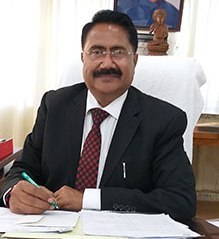
Prof. Prof. T. Mibang, the Vice Chancellor of Rajiv Gandhi University serves as the Chairman of the Board of Management.Read More .

Links

  • University Grants Commission
  • National Assessment and Accreditation Council
  • Consortium for Educational
  • Inflibnet
© 2010 All rights reserved.
Institute of Distance Education.